
In short
The right way to clean an area rug depends on its fiber. Synthetic rugs take hot water extraction well, wool needs cooler water and a mild detergent, hand knotted Persian and Oriental rugs need a dye test first, and silk is the most delicate. For every fiber, remove the dry soil first and dry the rug with air moving around it.
Worth remembering
- Match the method to the fiber. A step that suits a synthetic runner can ruin a hand knotted rug.
- Dry soil comes out first, before any water is used.
- Test the dyes in a hidden corner before any wet method on wool, Persian or Oriental rugs.
- Dry a wet rug flat, never rolled up or folded.
Start with the dry soil
Whatever the fiber, begin dry. Most of the weight in a used rug is sand and grit sitting at the base of the pile, and it cuts the fibers each time someone walks across. Vacuum both sides slowly. A small rug can be shaken outdoors first. Leave the beater bar off anything hand knotted, fringed or delicate and use suction alone.
Then identify the fiber. The tag on the back usually says. Without a tag, wool feels springy and recovers when pressed, synthetic fibers look uniform and slightly shiny, and silk has a sheen that changes color as you tilt the rug.
Synthetic rugs
Nylon, polyester and polypropylene rugs are the easiest to clean. They tolerate hot water extraction well, so a professional can treat one much as carpet is treated: dust both sides, pre-treat the traffic lanes, rinse and extract, then groom. At home, blot a spill with a white cloth and a little mild dish soap in cool water, rinse the same way and blot dry. Bleach can strip the color. A rug with a rubber or latex backing should not be soaked, because the backing can break down.
Wool rugs
Wool is durable and easy to damage in the same breath. Hot water and strong alkaline cleaners cause browning, shrinkage and brittle fiber. Wool wants cooler water, a mild detergent made for it and gentle agitation, and carpet shampoo is too harsh. Because wool holds water for a long time, use as little as you can and let air move across the rug until it is completely dry.
Persian and Oriental rugs
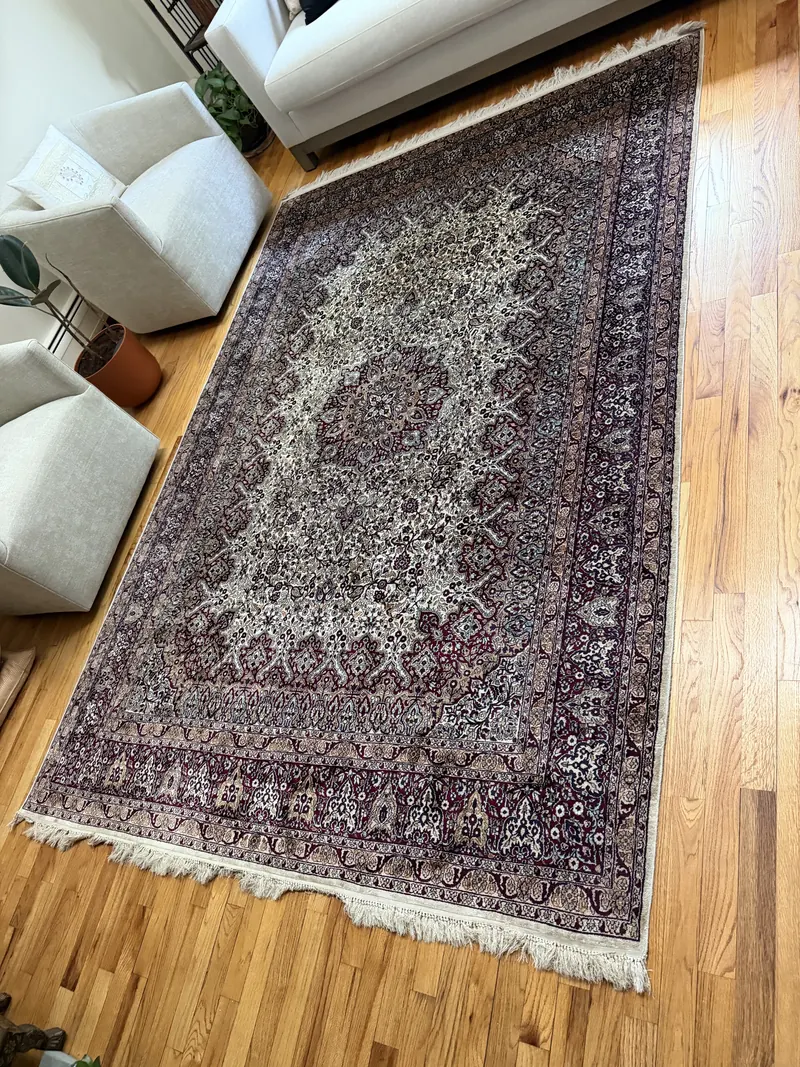
Many hand knotted rugs carry dyes that can bleed, so the dyes are tested in a hidden corner before any wet method touches the rug. If they hold, careful wet cleaning is usually possible. If they run, or the rug is fragile or valuable, a full immersion wash may be the only safe route, and the cleaner should say so. Keep these rugs away from pressure washers, garden hoses and rental machines.
Silk rugs
Silk is the most delicate fiber in common use. Water can leave rings and marks that do not lift, and silk loses strength when wet. Vacuum it lightly, blot spills at once and leave the rest to someone who works with silk. For many silk rugs a full immersion wash is a better choice than wet cleaning in place.
Mistakes that cause more damage than the dirt
- Pressure washing a rug in the driveway. It can break down the foundation and loosen knots.
- Using carpet shampoo on wool, which can brown the pile.
- Leaving a wet rug rolled up or folded, which invites mildew and dye bleed.
- Wet cleaning a Persian rug before the dyes are tested.
- Vacuuming fringe with a beater bar, which tears it out.
- Mixing cleaning products. Bleach with ammonia or vinegar gives off dangerous fumes.
Related service: Rug cleaning in New Jersey.
Questions, answered
How can I tell what fiber my rug is made of?
Check the tag on the back first. Without one, look at the fringe and the pile: wool is springy, synthetics look uniformly bright and a little shiny, and silk has a sheen that shifts with the light. If you are unsure, treat the rug as wool and ask a cleaner before using water.
Can I put an area rug in the washing machine?
Only if the care label says it is machine washable, which is rare and mostly limited to small, thin rugs. Wool, hand knotted rugs and anything with a rubber backing or fringe can be damaged by the agitation and the spin cycle.