
Memory foam does not behave like a traditional mattress when wet. Too much water can break down the foam structure and create permanent dips. Here is a careful, effective at-home routine plus when to bring in professional help.
Vacuum first, every time
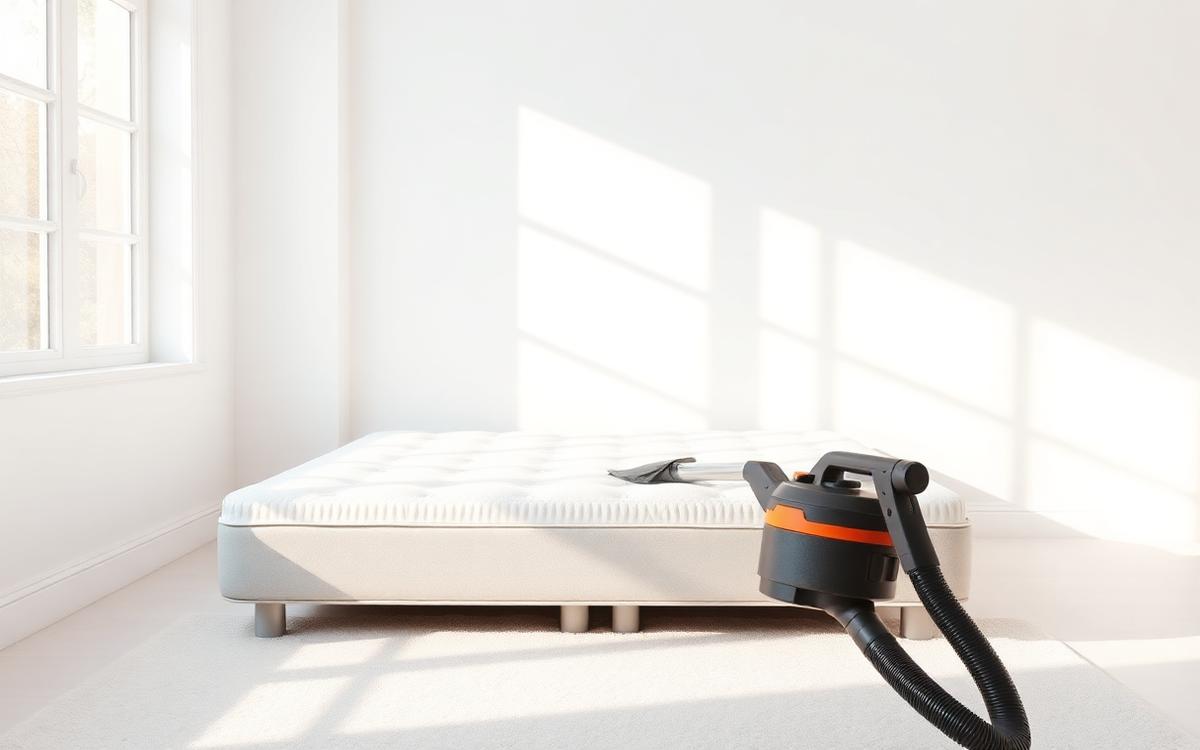
Use a HEPA-filter vacuum with the upholstery attachment. Vacuum the entire surface, sides, and seams to lift surface dust, dead skin, and dust mite debris.
This single step makes more difference than any cleaning spray you can buy.
Spot-treat without soaking
Mix two tablespoons of hydrogen peroxide, one teaspoon of dish soap, and one tablespoon of baking soda. Dab onto stains with a cloth, do not pour. Let it sit ten minutes, then blot with a clean damp cloth.
Never saturate memory foam. Water trapped inside the foam takes days to evaporate and can permanently smell.
Deodorize and dry
Sprinkle baking soda over the whole surface, let it sit a few hours, then vacuum thoroughly. Pair this with a few hours of airflow, an open window or a fan across the surface, to dry any moisture from spot treatment.
For mattresses with persistent odor, set-in stains, or allergy concerns, a professional low-moisture mattress cleaning is the safer option.
Bottom line
DIY handles light maintenance on memory foam. For anything beyond surface stains, professional cleaning uses controlled moisture and proper recovery so the foam does not stay wet. Call for a free quote.
Service areas
Keep reading
Mattress Cleaning Cost in NJ: What to Expect
Honest pricing for mattress cleaning in NJ, what changes the cost, and what should always be included.
ReadMattress Cleaning Guide: Allergies, Dust Mites & Why It Matters
Your mattress holds more than you'd want to think about. Here's how often to clean it, what professional service includes, and the difference it makes.
Read