
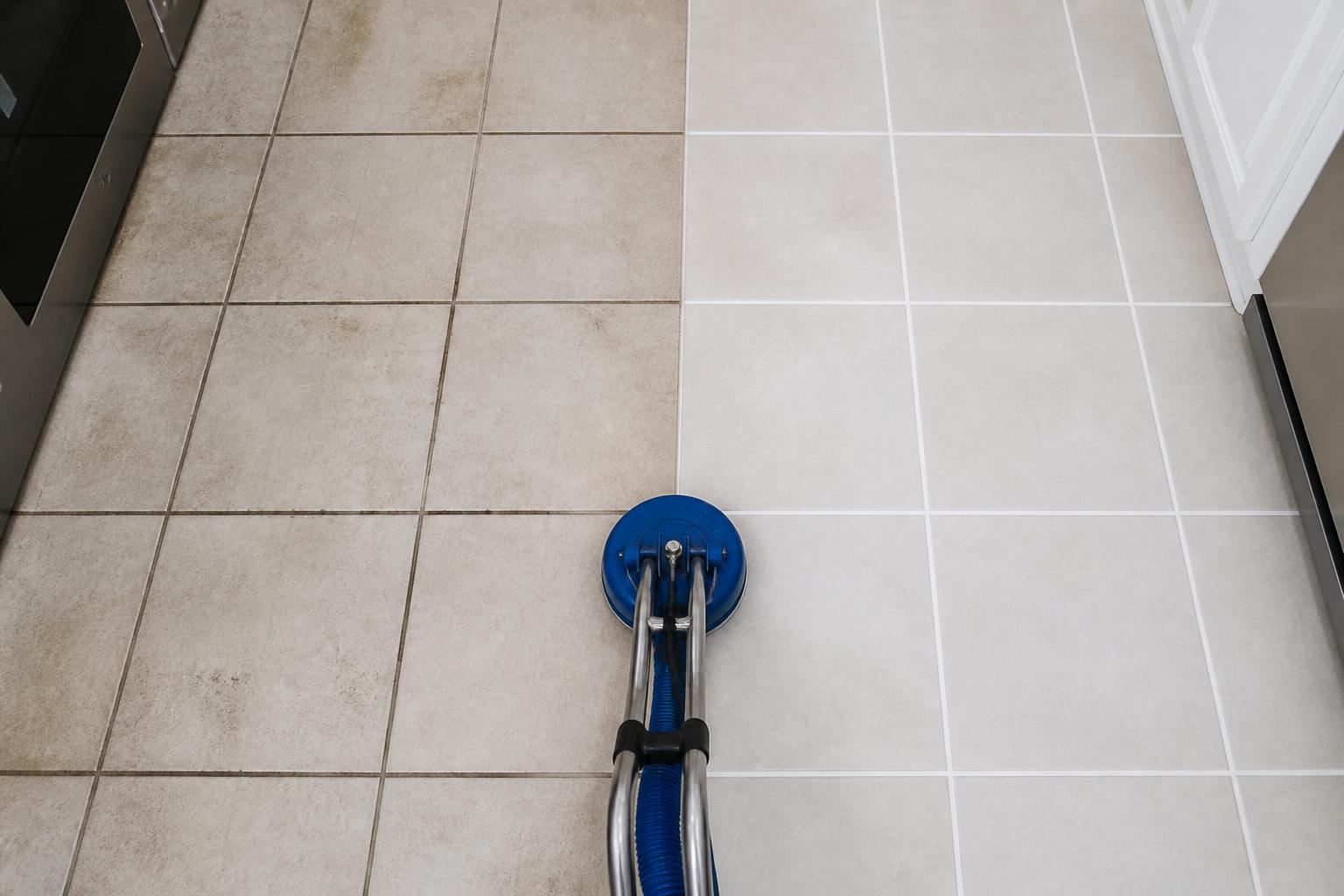
Shower grout discolors because it is porous. Soap residue, body oils, hard-water minerals, and mildew settle into the pores and a household sponge cannot reach them. Here is the order to try at home and where the line is.
Start with the right cleaner
Mix baking soda and water into a thick paste, apply to the grout lines, and let it sit 10 to 15 minutes. Scrub with a stiff nylon brush, never wire, then rinse with hot water.
For mildew, a 50/50 mix of hydrogen peroxide and water sprayed on, left for 10 minutes, then scrubbed, handles most surface mildew.
Avoid the products that make it worse
Skip bleach unless you are prepared for it to bleach the grout permanently in patches. Avoid vinegar on natural stone like marble or travertine, it etches the surface.
Stiff metal brushes destroy grout texture and create new pores for more dirt to settle into.
When professional cleaning makes sense
If you have scrubbed and the grout still looks gray or brown, the discoloration is below the surface. Professional tile and grout cleaning uses a heated alkaline solution with dwell time and a hot-pressure rinse-and-extraction tool that reaches what a brush cannot.
After cleaning, ask about sealing. A penetrating sealer fills the pores so the next round of soil sits on top instead of soaking in.
Bottom line
Most shower grout we clean comes back several shades lighter in a single visit. Call for a free quote and we will price cleaning and sealing separately so you can decide.
Service areas