
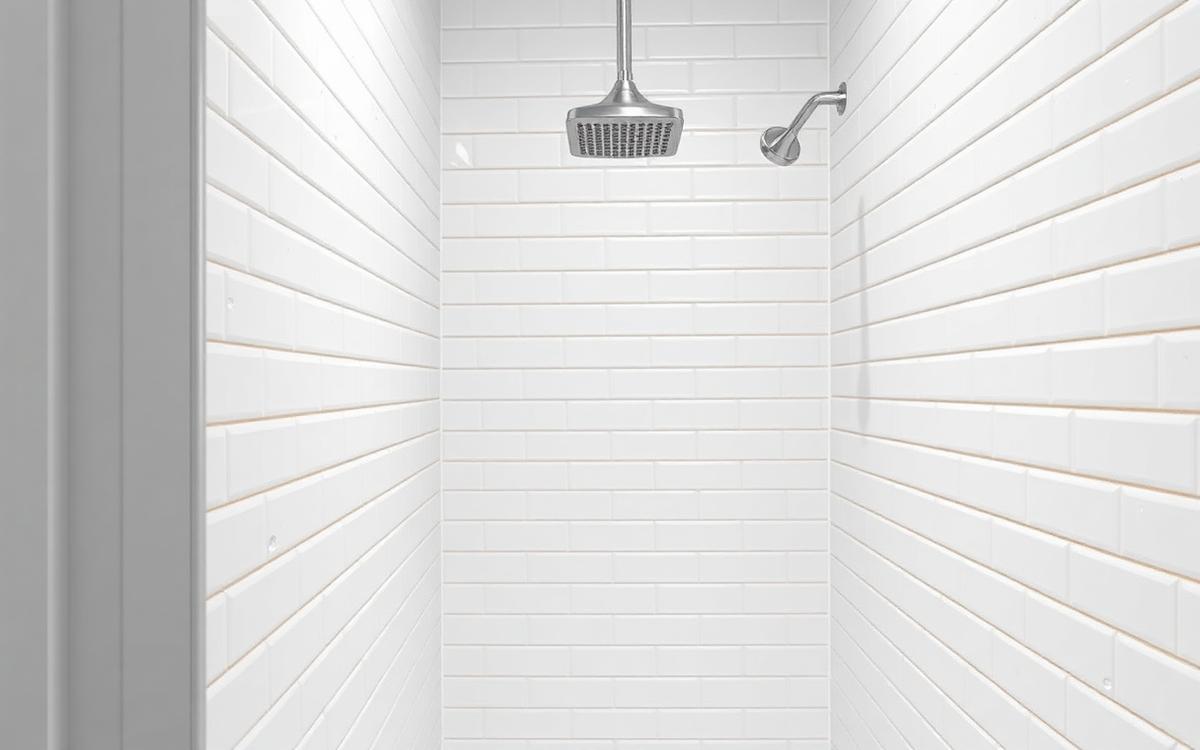
Most grout damage we see is not from age. It is from acidic cleaners and aggressive scrubbing that erode the cement surface, leaving grout that gets dirty faster every time it is cleaned.
Skip the vinegar
Vinegar is acidic and cement-based grout is alkaline. Repeated vinegar cleaning etches the surface, opens the pores wider, and makes future staining worse. The same applies to lemon juice and most descaling products.
What to use instead
A pH-neutral or mildly alkaline tile cleaner, warm water, and a nylon grout brush. Let the cleaner dwell for 5 to 10 minutes before you scrub so it does the work instead of your arm.
- pH-neutral tile cleaner for routine care
- Alkaline degreaser for kitchen floors
- Nylon brush, never wire or steel
- Rinse with clean water and dry with a towel
Baking soda paste, when it helps
A baking soda and water paste is safe and mildly abrasive. It works on light discoloration in bathrooms. It will not touch grout that is uniformly gray from years of mop water.
When DIY stops working
If the grout looks the same after a thorough hand scrub, the soil is below the surface and only pressurized extraction will bring it out. That is the point to stop scrubbing and book a professional cleaning.
Bottom line
Clean gently, rinse well, and seal once a year. When the grout stops responding, we can restore it. Free quotes across New Jersey.
Service areas