
In short
Carpet should be vacuumed slowly, in overlapping passes, with the height setting matched to the pile, and high traffic rooms need more frequent passes than bedrooms. A fast pass with the wrong setting leaves grit sitting at the base of the fibers, where it cuts into them with every footstep. Vacuuming often in stairs and halls, where soil builds up faster, keeps the pile fuller longer and gives a professional cleaning less work to undo.
Worth remembering
- Vacuum slowly and overlap each pass, since quick passes leave soil and grit sitting in the fibers.
- Match the beater bar setting to the pile height, since a bare floor setting can tear carpet fibers.
- Stairs and halls soil faster than bedrooms, so they need vacuuming more often.
- A vacuum with a full bag or dull brush roll loses suction and leaves grit behind.
Why the Way You Vacuum Matters
Carpet fibers are worn down less by foot traffic than by the grit that traffic grinds into them. Every grain of sand or road salt carried in on a shoe sits near the surface until it works down to the base of the pile, where it acts like sandpaper on the fiber with every step. A vacuum that moves quickly across the surface only lifts the loose fluff on top and leaves that grit behind.
Slow, overlapping passes give the brush roll time to agitate the pile and the suction time to pull soil up and out. A pass that crosses the same strip of carpet from two directions, once forward and once at an angle, catches what a single pass missed.
Setting Up the Vacuum Before You Start
Most upright vacuums have a dial or lever that raises and lowers the brush roll for different pile heights. Set it for carpet rather than bare floor, so the brush roll makes contact with the fibers without digging too deep or bogging down the motor. On a thick or looped pile, a setting that is too low can snag and pull loops, so start higher and lower it only if dirt is left behind after a few passes.
- Check that the brush roll spins freely and is not tangled with string.
- Use the crevice tool along edges, baseboards and corners where the roller cannot reach.
- Use the upholstery tool for stairs, since a full size head is hard to control on a step.
- Empty the bag or canister when it is about two thirds full, since a full bag cuts suction.
A Room by Room Approach
Start at the far corner of a room and work toward the door, so the path already vacuumed never gets walked on again before you leave. In a living room or family room, go over the main path between the doorway and the seating twice, since that strip sees the most grit. Move light furniture rather than vacuuming around it, since soil and pet hair collect under the edges of a sofa or a bed just as much as in the open floor.
On stairs, vacuum each tread from the back edge forward, where feet land hardest, and run the crevice tool along the side of each step where the carpet meets the wall. In a hallway, go over the center twice before moving to the edges, since the center carries nearly all the foot traffic of the home.
How Often Each Room Needs It
Stairs and hallways soil faster than any other carpeted space in the home, since every trip through the house crosses them, and road salt and outdoor grit tend to collect near the top and bottom step. These areas hold up better with vacuuming a few times a week.
- Entryways and hallways, several times a week
- Living rooms and family rooms, once or twice a week
- Bedrooms and guest rooms, once a week
- Rooms used mainly for storage or rarely entered, every couple of weeks
Keeping the Vacuum Itself Working
A vacuum with a clogged filter, a tangled brush roll or a nearly full bag loses suction long before it looks obviously dirty, and from that point on, every pass accomplishes less than it should. Check the brush roll for wrapped hair and thread, since a roll that cannot spin freely just drags soil around instead of lifting it. Rinse or replace the filter according to the machine's instructions, and empty the bag or canister before it is tightly packed.
What Vacuuming Can and Cannot Fix
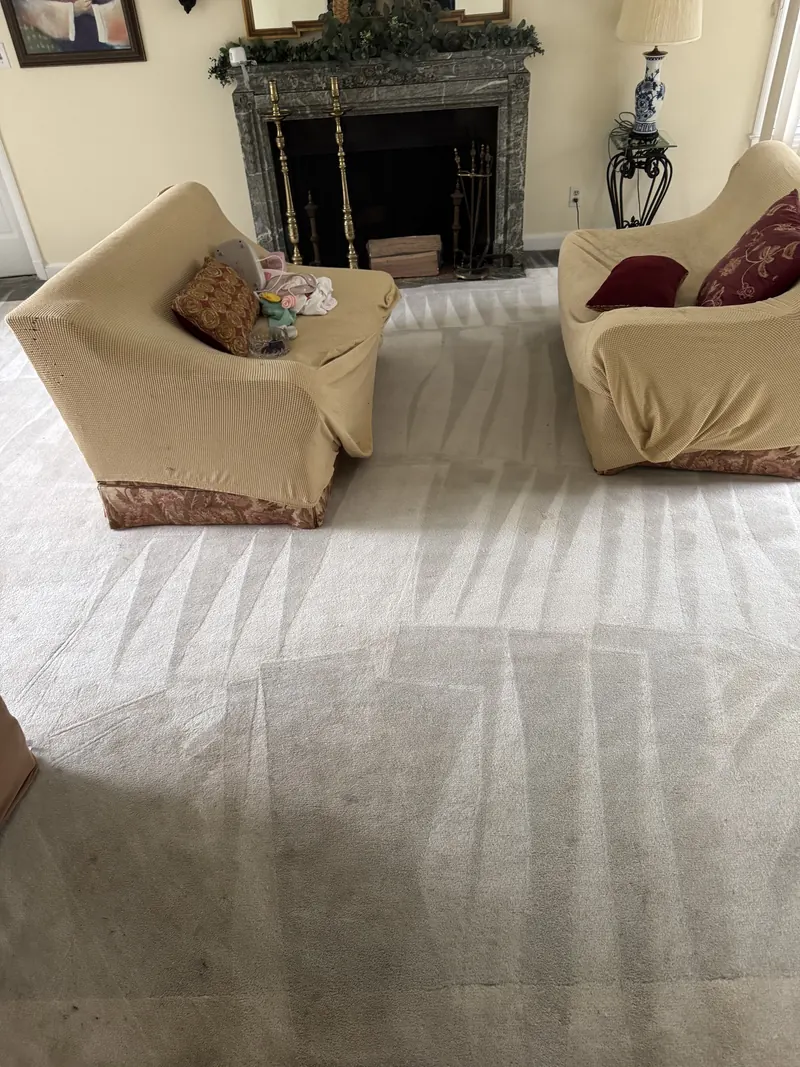
Regular vacuuming removes the dry soil, dust and grit sitting in the pile, and that alone slows how fast carpet wears and keeps it looking fuller longer. It does not lift oily residue, set in stains or soil that has worked its way down to the backing, since those need moisture and agitation a vacuum cannot provide. Carpet that still looks dull or matted in the traffic lanes after regular vacuuming is telling you it is due for a professional cleaning, which treats those lanes and spots before the main pass and lifts the soil vacuuming cannot reach.
Related service: Carpet cleaning in New Jersey.
Questions, answered
How often should carpet be vacuumed?
High traffic areas like entryways, hallways and stairs do well with vacuuming several times a week, while bedrooms and guest rooms usually need only once a week. Rooms that sit mostly empty can go longer between passes. Matching the frequency to how much a room is used keeps grit from building up in the pile.
Does the vacuum setting really matter on carpet?
Yes. A brush roll set too low for the pile can snag loops or wear the fibers, while a setting meant for bare floors barely touches the dirt sitting in thick carpet. Matching the height setting to the pile lets the brush roll agitate the fibers without damaging them.
Can vacuuming replace a professional carpet cleaning?
No. Vacuuming lifts the dry soil sitting on top of and within the pile, but it cannot reach oily residue, set in stains or grit packed down near the backing. Carpet that still looks dull or matted along the traffic lanes after regular vacuuming needs a professional cleaning to treat those areas properly.