
In short
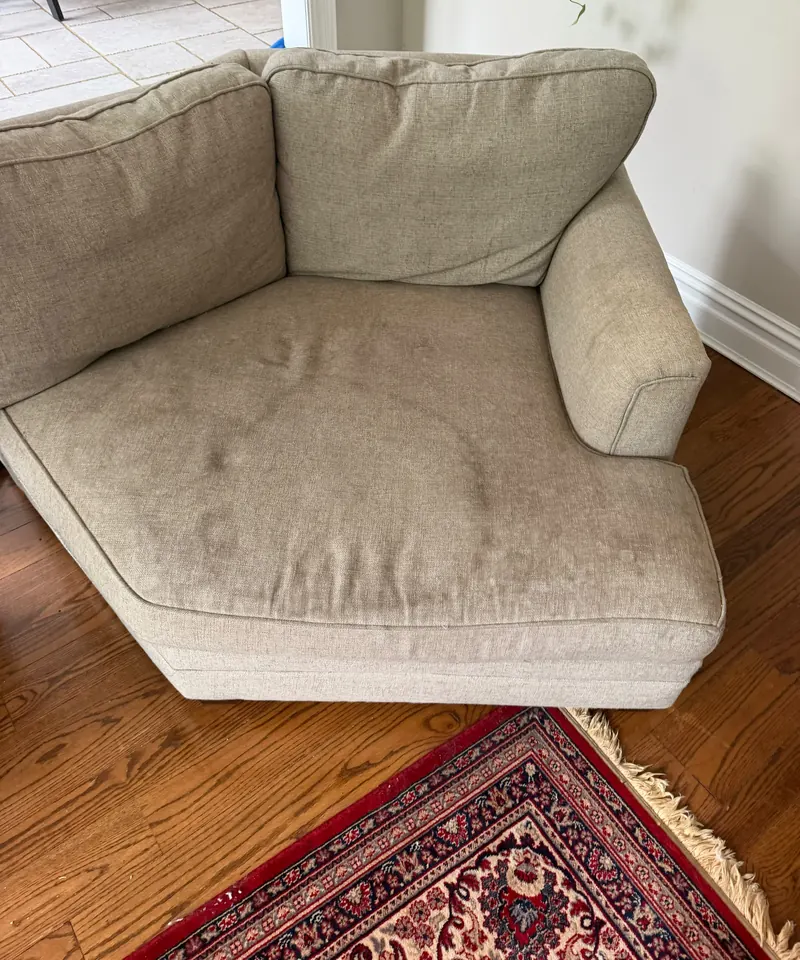
A sectional is usually deep cleaned about once a year, and about every six months when pets, children or heavy daily use wear it down. It is cleaned as a whole piece, because one fresh section beside a worn one shows. The corner seat and the chaise often soil first, which makes them a useful guide to when the sectional is due.
Worth remembering
- About once a year is normal, and about every six months for pets, children or daily heavy use.
- Clean the whole sectional together so every section ends up the same shade.
- The corner seat, the chaise and the arms show wear first.
- Plan extra airflow, since a large piece with many cushions holds more moisture.
Why a sectional is on its own schedule
A sectional replaces two or three pieces of furniture and often serves as the main seating of a room. More people sit on it, for longer, across more cushions. That makes the calendar for a single sofa a poor fit, and the sectional's own signs a better guide.
It also hides wear in a different way. On a sofa, a stained seat is obvious. On a sectional, the corner and the chaise can darken for a year before anyone notices, because the rest of the piece still looks fine.
A baseline and the reasons to shorten it
For a quiet household, about once a year works. With pets that sleep on the cushions or children who eat in the living room, plan on about every six months. If the sectional is the only seating in an open plan room and is used every day, cleaning more often than that can be worth it.
Between deep cleanings, vacuum weekly and treat spills as they happen. Those habits widen the gaps without letting oil settle in.
Clean the whole piece together
Cleaning a single section is tempting when one seat is stained, and the result is usually uneven: the clean section looks brighter than its neighbors, and the contrast draws the eye to the rest. A sectional is cleaned as one piece, with the quote covering all of it. Work out which sections get the heaviest use and tell the cleaner.
The same logic applies to cushions you swap. If one seat cushion has been cleaned and its twin has not, the two will not match for long, so plan the cleaning for every cushion at once.
Reading the wear
Some parts of a sectional soil faster than others. Check these first when you are judging whether it is due.
- The corner seat, where people settle in for the longest.
- The chaise, which collects bare feet, pets and spilled drinks.
- The arms and headrest, where skin oil and hair products collect.
- The back edge of each seat, where crumbs slide down.
Seams, gaps and removable cushions
Crumbs collect in the joints where sections connect and along the line where the back meets the seat. A crevice tool clears them, and the joints may need pulling apart a little to reach. Rotate loose cushions, and swap them between sections when the design allows.
Do not machine wash covers unless the label says so. A cover that shrinks never fits again, and the foam inside never goes in a washer.
Drying a large piece
A sectional holds more fabric and more foam than a sofa, so it takes longer to give up moisture. Expect a few hours, and expect a thick sectional in a closed room to need more air than a small chair would. Open a window on a dry day or run the air conditioning, and keep a fan moving across the cushions.
Related service: Sofa cleaning in New Jersey.
Questions, answered
Can I clean one section of a sectional at a time?
You can spot clean one, but a deep clean of a single section tends to leave it brighter than the rest. Cleaning the whole sectional keeps the color even. If you must choose, start with the corner and the chaise, and tell the cleaner what is planned.
Do removable sectional cushion covers go in the washing machine?
Only when the label on the cover says so. Many covers shrink or lose their shape, and the foam inside should never be machine washed. Without a label, treat the covers like the rest of the fabric: read the cleaning code and test a hidden spot before using liquid.
Which part of a sectional gets dirty first?
Usually the corner seat and the chaise, since people settle into them for the longest. The arms and headrest follow because skin oil and hair products collect there. Check those parts first when judging whether it is time to clean.