
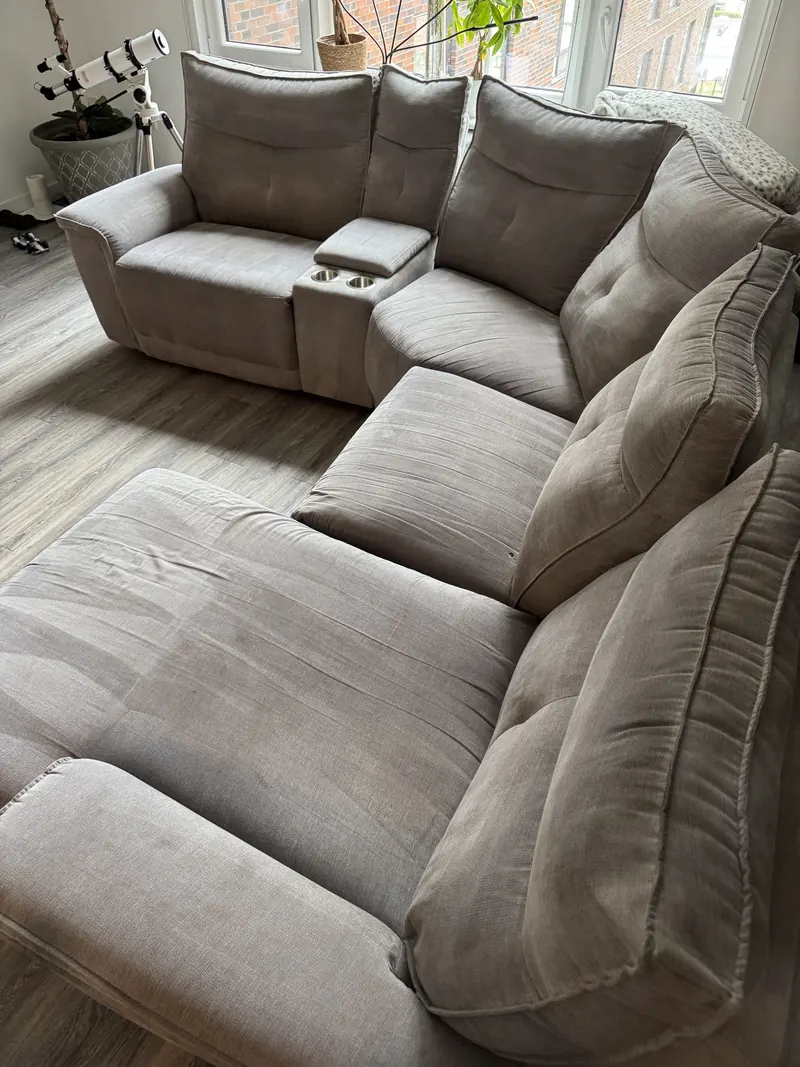
In short
A fabric sofa stays clean at home with a short weekly vacuum, a monthly turn of the cushions and a quick habit of blotting spills. Read the cleaning code on the tag before any liquid touches the fabric, and keep moisture low, because the foam inside holds water for a long time. Soil that has gone below the surface needs extraction, not more scrubbing.
Worth remembering
- Vacuum weekly with the upholstery tool, including the seams and the frame under the cushions.
- Turn and swap loose cushions every month so wear and sun fade spread evenly.
- Read the cleaning code on the tag before any liquid goes near the fabric.
- Dark arms, a stale smell and a gritty feel mean oil has built up beyond what home care reaches.
The weekly vacuum
Dry soil does the first damage. Crumbs, grit and pet hair work down into the weave, and the grit cuts the fibers a little every time someone sits. Once a week, go over the seat, back, arms and sides with the upholstery tool, moving slowly enough for the nozzle to pull from the weave. Quick passes only skim the surface.
Then lift the cushions out. The frame underneath and the seams between the cushions collect the most debris, and a crevice tool reaches it. Do this before any liquid touches the sofa, because damp fabric turns trapped dust into a paste that is far harder to remove.
The monthly turn and wipe-down
A few small jobs once a month spread the wear and catch problems early.
- Turn and swap loose cushions. A cushion that always sits in the same spot flattens and darkens first.
- Wash throw pillow covers and blankets by the instructions on their own labels.
- Wipe wooden or metal legs with a dry cloth and vacuum the floor under the sofa.
- Check the arms and headrest for darkening, a slightly tacky feel or a faint smell. Those mean skin oil is building up.
- Shift the sofa a few inches if sun falls on one side all day, since direct sun fades fabric unevenly.
Habits that keep a sofa cleaner between cleanings
Most of what darkens a sofa comes from skin, hair products and lotion, not from visible spills. A folded throw over the favorite seat takes that load instead, and it goes into the wash. Eating over a plate, keeping outdoor shoes off the cushions and brushing a pet before it settles in all slow the buildup.
None of this replaces a deep cleaning. It stretches the time before one is needed.
Reading the cleaning code
Every fabric sofa carries a care tag, usually under a seat cushion or on the underside of the frame. W means water-based cleaners are safe. S means solvent-based cleaners only, with no water. WS accepts either, and X means vacuuming or brushing only, with no liquid at all. The letter decides what you may use at home, so find it before you buy a product.
If the tag is missing, treat the sofa as the most delicate case: vacuum only, and test a hidden area such as the back panel before using any liquid. Let the test spot dry fully. A ring, color on the cloth or a change in texture means the product is wrong for this fabric.
When home care is no longer enough
Darkened arms and headrests, a smell that returns after airing and stains that have sat for months are signs that soil has gone below the surface. A vacuum cannot reach it, and a damp cloth moves it around. Extraction removes soil instead of relocating it, and a cleaner can tell you what a cleaning is likely to change before any work begins.
Flying Carpet Cleaning NJ begins a job by examining the fabric and its condition, and gives quotes at no charge.
Related service: Sofa cleaning in New Jersey.
Questions, answered
Can I use a handheld steamer on a fabric sofa?
Only with caution. Heat and steam can set protein stains, shrink some fabrics and leave rings, and the foam under the cover stays damp for a long time. Check the tag first, test a hidden spot, and skip steaming S and X fabrics entirely.
Is it fine to sprinkle baking soda on a sofa?
Usually yes on a dry sofa, to take up odor. Test a hidden spot, leave the powder for a while, then vacuum it all out slowly. Do not use it on damp fabric, where it can form a crust that is hard to remove.
Can sofa cushion covers go in the washing machine?
Only if the cover's own label says so. Many sofa covers shrink or lose their fit when washed, and the foam insert should never go in a machine. When the label is missing, vacuum the cover in place and test a hidden spot before using liquid.