
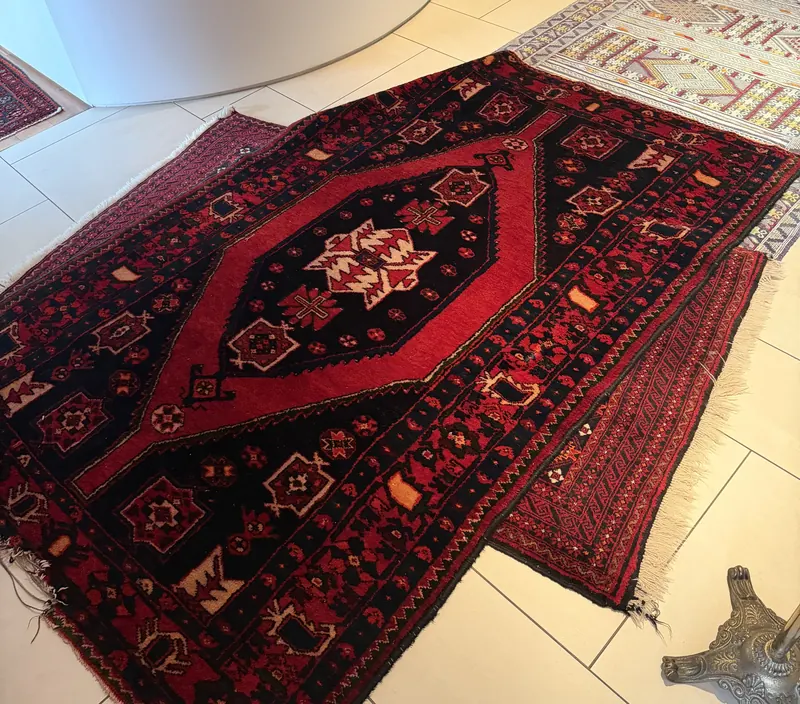
In short
Expect a look at the rug before anything else, then a method chosen for its fiber and dyes, with the rug cleaned where it lies. You are told what cleaning can and cannot do before work begins, and told if the rug needs a full immersion wash instead. Most rugs are dry within a few hours.
Worth remembering
- The visit starts with a look at the fiber, the condition and the spots that matter.
- Rugs are cleaned where they lie, with the method chosen for the material.
- A rug that needs a full immersion wash is identified before any work is done.
- Drying takes a few hours and depends on the material, the weather and the airflow.
What happens first
Before any water touches the rug, someone should look at it. The first look takes in the fiber, the construction, the condition of the pile and the spots that matter to you: the stain beside the sofa, the corner the dog favors, the traffic lane from the door. That look decides the method, so it helps to walk the cleaner over to each rug and point out what you already know about it.
This is also the moment for plain talk about limits. Soil, odor and most spills respond well. A dye that has already run, a worn patch or wool faded by the sun will look the same afterward, and you are told so before work begins.
Cleaned where it lies
Rugs are cleaned where they lie, in your home or business. Clear small objects off the rug beforehand, and mention any heavy piece of furniture when you ask for the quote. Wet cleaning leaves the floor under a rug damp as well, so the floor matters as much as the rug.
Two methods cover most rugs. Hot water extraction, often called steam cleaning, rinses the pile and pulls the water back out. A low moisture method uses far less water. The material decides which one fits. Machine made synthetic rugs usually handle hot water extraction well, while wool, silk blends and rugs whose dyes might run call for the gentler approach.
The order of work
A sound rug cleaning follows a sequence, and the sequence matters as much as any single step.
- Remove dry soil first. Most of what a rug holds is dry grit at the base of the pile.
- Test the dyes in a hidden spot before anything wet is applied.
- Treat spots and traffic lanes before the main cleaning.
- Clean the whole rug with the method chosen for the material.
- Groom the pile in one direction and set the rug to dry with air moving around it.
Drying
Most rugs are dry within a few hours. The fiber, the thickness of the pile, the weather outside and the air moving indoors set the actual time. Thick wool holds more water than a synthetic rug and takes longer, and a humid New Jersey day slows everything down. Air conditioning or a fan blowing across the rug does more than an open window on damp air.
Keep the rug flat until it is dry. Rolled or folded while damp, a rug can sour, and dye can travel where wet pile touches a neighboring color. Check the floor under the rug later in the day. If it feels damp, lift an edge and let air reach it.
When a rug needs a full wash
Some rugs cannot be cleaned well in place. A fine hand knotted rug with dyes that bleed, or one soaked with old pet urine, may need a full immersion wash. If yours is one of them, you are told so, and why, before anything is done. That conversation belongs to any good rug cleaning.
Asking for a quote
A quote costs nothing and rests on three facts: the rug's dimensions, its fiber and its condition. Measure the length and width, read the tag on the back for the fiber, and say so if pets have had accidents on it. We serve homes and businesses across six counties in North and Central New Jersey.
Related service: Rug cleaning in New Jersey.
Questions, answered
Does my rug have to leave the house to be cleaned?
No. Rugs are cleaned where they lie, in your home or business. The exception is a rug that needs a full immersion wash, and if yours is one, you are told so before any work begins and can decide what comes next.
Should I vacuum the rug before the cleaning visit?
Yes, both sides if you can, with the beater bar off on wool or fringed rugs. Loose grit comes out easily when dry and turns to mud once wet. Skip home spot treatments unless a spill is fresh, because leftover product can complicate the cleaning.
Will cleaning change how the rug looks?
It should look cleaner and brighter, and a flattened pile often stands up again. Cleaning cannot restore faded color, worn patches, moth damage or dye that has already bled, and you hear which marks are likely to stay before work begins.