
In short
How often you should clean an area rug depends first on what it is made of. Synthetic rugs tolerate cleaning about once a year, wool rugs can go a year or two, hand knotted Persian and Oriental rugs often two to four years, and silk and plant fiber rugs only when needed and with care.
Worth remembering
- Synthetic rugs take frequent cleaning well: about every 12 months in a busy room.
- Wool hides soil, so look at the underside rather than trusting the surface.
- Hand knotted rugs are cleaned less often because wet cleaning is harder on them.
- Silk, jute and sisal are cleaned only when needed, and only by someone who knows the fiber.
Why the fiber sets the schedule
Fibers hold soil differently and tolerate water differently, and both facts decide how often cleaning makes sense. A fiber that shrugs off water can be cleaned often. A fiber that is harmed by moisture is cleaned as rarely as the soil allows and looked after in between. Treat the ranges below as a starting point, then shorten them for heavy use, for pets or for a rug that sits at the front door. A rug in a spare room can stretch past them.
Synthetic rugs
Nylon, polyester and polypropylene rugs are made for use. They stand up to hot water extraction, so cleaning every 12 months in a busy room and every 18 to 24 months in a quiet one is reasonable. Polypropylene attracts the oily film that feet and cooking leave behind, so a rug of that kind in a kitchen or an entry shows grime sooner than the calendar suggests.
Wool rugs
Wool resists soil well and conceals what it holds, so it often looks clean long after it needs cleaning. A wool rug in a living area does well with a cleaning every 12 to 24 months, the shorter end for busy rooms. Frequent wet cleaning is not a goal, because wool dries slowly and handles repeated soaking poorly. Between cleanings, careful vacuuming and quick action on spills do most of the work.
Hand knotted Persian and Oriental rugs
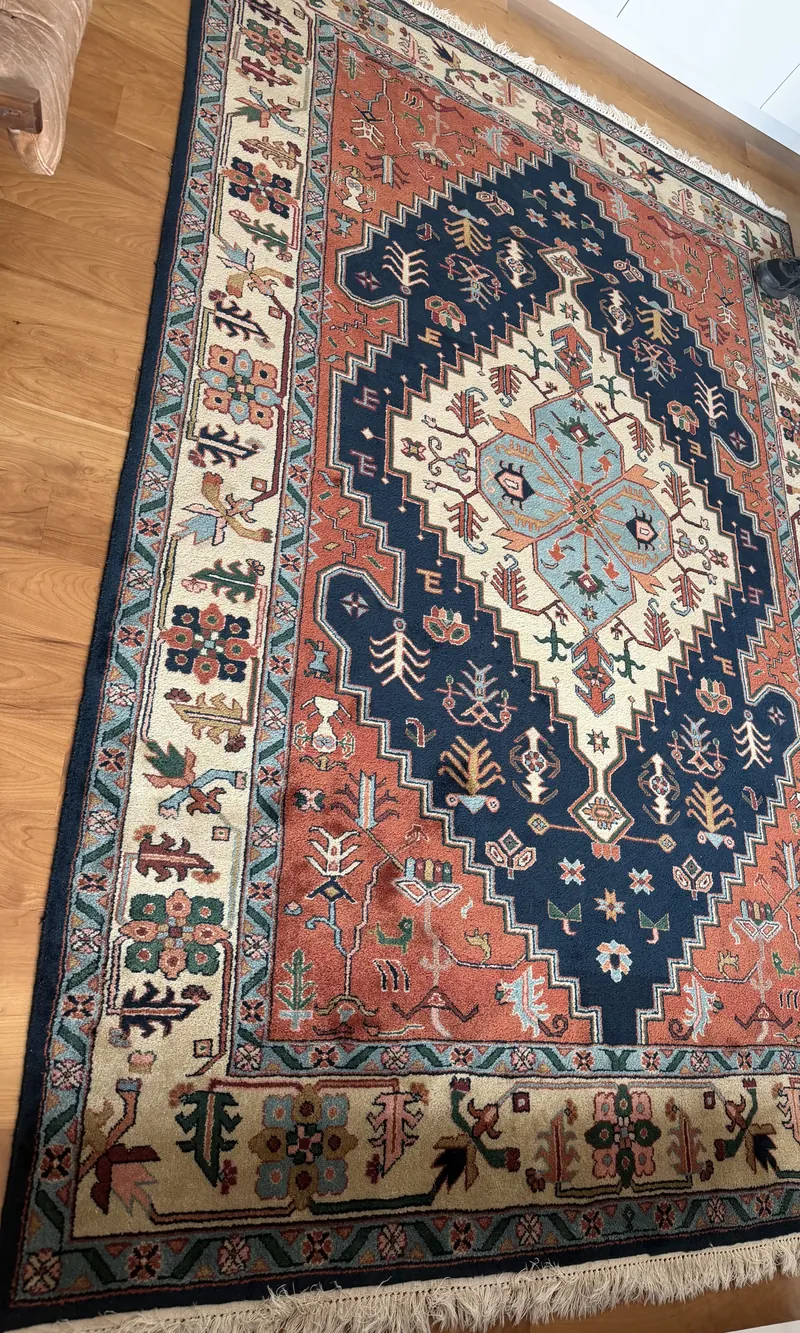
A well kept hand knotted rug often goes two to four years between full cleanings. The long gap is deliberate. These rugs carry dyes that can run and foundations that wet cleaning strains, so a cleaning should happen when it is needed and begin with a dye test. Rugs where pets sleep, rugs near an entry and rugs with a musty smell come sooner. If a rug needs a full immersion wash, you are told so before work starts.
Silk, cotton, jute and sisal
Silk rugs are cleaned rarely, when soil is visible, by someone who works with silk, since water can mark it. Jute and sisal are plant fibers that turn brown when soaked, so they get dry methods and quick blotting of spills. Flat woven cotton rugs often take cleaning more easily, though the care label should be read before assuming so.
A quick test between dates
Turn back one corner and look at the underside, which shows soil that the top hides. Press your palm firmly into the pile and lift it. A gray film on the skin or a puff of dust means the rug is due. Smell the rug on a humid day, when stale odors are strongest. If you cannot remember the last cleaning, the rug is due. Write the date on a note and keep it with the rug pad or inside a closet, so the next interval does not depend on memory.
Related service: Rug cleaning in New Jersey.
Questions, answered
Is it bad to clean a rug too often?
For most synthetic rugs, no. Wool and hand knotted rugs are harder on water and handling, so clean them when they need it rather than on a fixed short schedule. Gentle vacuuming can be done weekly on all of them.
My rug looks clean. Do I still need to clean it?
Often yes, if more than a year or two has passed. Rugs hide soil in the base of the pile and in the foundation. A gray underside or a stale smell means the rug is due even when the top looks fine.