
In short
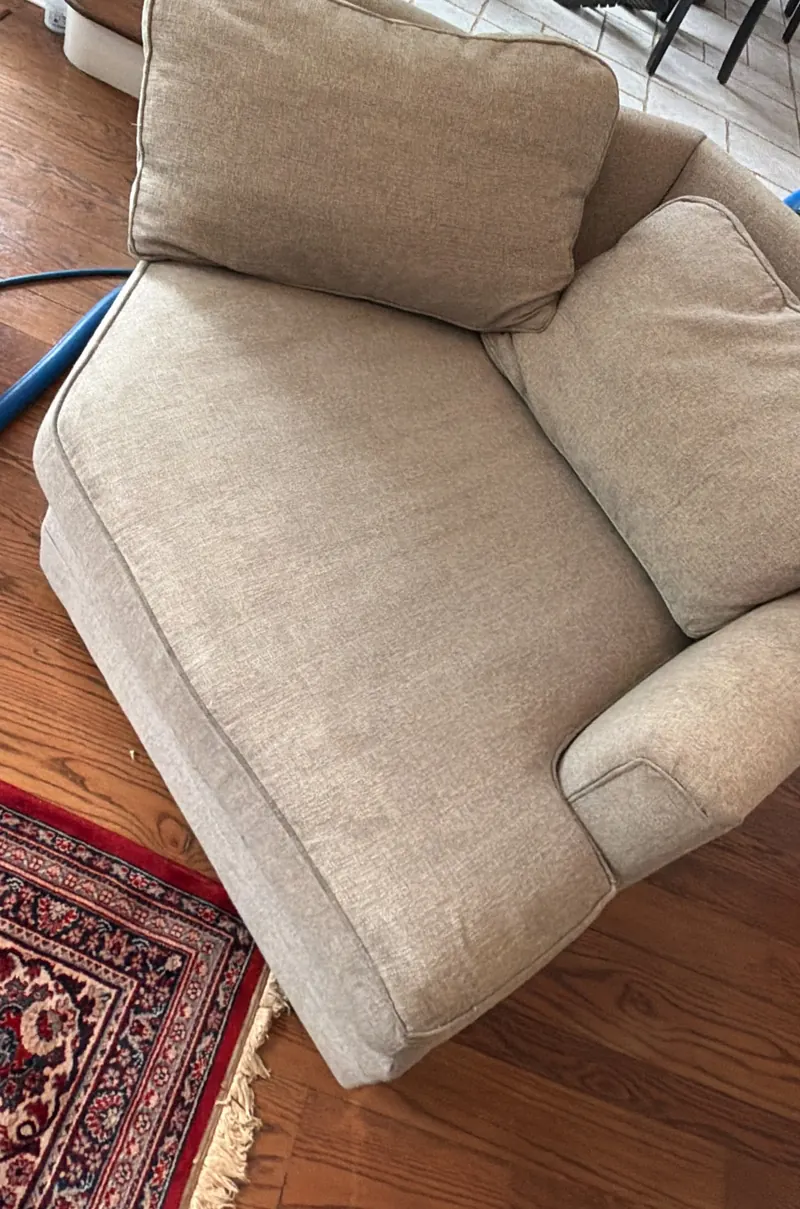
To remove pet hair from a sofa or carpet, loosen it first, then vacuum. A rubber squeegee, a damp rubber glove or a stiff brush balls up hair that a vacuum alone leaves woven into the fabric. Check the cleaning code on the sofa tag before using water, and groom the pet and wash the throws to keep hair from coming back.
Worth remembering
- Hair weaves into fabric and carpet, so a vacuum alone leaves most of it behind.
- Loosen first with rubber or a stiff brush, then vacuum what has balled up.
- Check the cleaning code on the sofa tag before using any moisture.
- Brushing the pet and washing throws weekly cuts hair at its source.
Why a vacuum leaves hair behind
Pet hair is barbed along its length, and static helps it cling. It does not sit on the surface of upholstery or carpet. It weaves into the pile. A vacuum pulls on the top of each strand while the rest stays tangled, which is why the hair often looks the same after a pass. Many pets shed more heavily in spring and fall as their coats change, so the amount you face varies through the year. Fine, short hair works in like a splinter, and long hair wraps around loops of yarn.
Loosen it before you vacuum
Rubber pulls hair into rolls. Drag a rubber squeegee, a dampened rubber glove or a rubber bristle brush across a sofa in one direction and the hair clumps in front of it. On carpet, a stiff brush or a rubber broom pulled one way does the same. Lift the clumps off by hand or vacuum them up. Work in short strokes, empty the rubber tool often, and finish smooth fabric with a lint roller for the last stray hairs, which is slow on a large sofa but thorough on a cushion.
Check the fabric before using water
Upholstery carries a cleaning code on its tag, often under a seat cushion. W means water based cleaning is fine, S means solvent only and no water, WS allows either, and X means vacuum only. A lightly dampened glove suits W and WS fabrics. On S and X fabric, keep every tool dry. Test a hidden spot first on any fabric, and leave suede, velvet and silk out of the damp glove method.
Reduce static and choose the right vacuum
A very light mist of plain water on a washable fabric reduces static, so the hair lets go more easily. Skip the mist on S or X coded fabric. A handheld vacuum with a motorized brush and a crevice tool reaches seams and cushion edges better than a plain hose, and a carpet vacuum needs a brush roll that you can clear of wrapped hair. Empty the canister often, since a full one loses suction. On carpet, go slowly and cross the area in two directions, because the brush needs several passes to lift hair that has settled between the tufts.
Keeping it under control
- Brush or comb the pet outdoors once a week, more often during heavy shedding.
- Put a washable throw where the pet sleeps and wash it weekly.
- Vacuum the sofa and the carpet along the pet's favorite path each week.
- Replace the vacuum filter and the filter in the heating and cooling system on schedule.
When hair is deeper than you can reach
Hair, dander and body oils collect in the weave and at the base of carpet pile, deeper than a household vacuum goes. Flying Carpet Cleaning NJ cleans sofas, sectionals, upholstered furniture and carpet in your home. Hot water extraction or a low moisture method is picked according to what the fabric can take, and you hear what to expect first.
Related service: Sofa cleaning in New Jersey.
Questions, answered
Does a damp rubber glove work on pet hair?
Yes, on fabrics that can take a little water. The rubber grips the hair and rolls it into clumps you can lift off. Read the code on the sofa tag first. On S or X coded fabric, use a dry rubber tool instead.
Why is there still hair after I vacuum the carpet?
Hair catches around the base of the pile and in the brush roll, so the vacuum may drag it around instead of lifting it. Loosen it with a stiff brush pulled one way, vacuum slowly in several directions, and cut away any hair wrapped around the brush roll.